
Spuki's Nature Tips
The forest as a place of calm, discovery and connection – 10 tips for mindful time in nature. For every child, at their own pace.
The forest is naturally low-stimulus: no traffic, no screens, no crowds. For children who experience the world more intensely, it can become a place of deep calm.
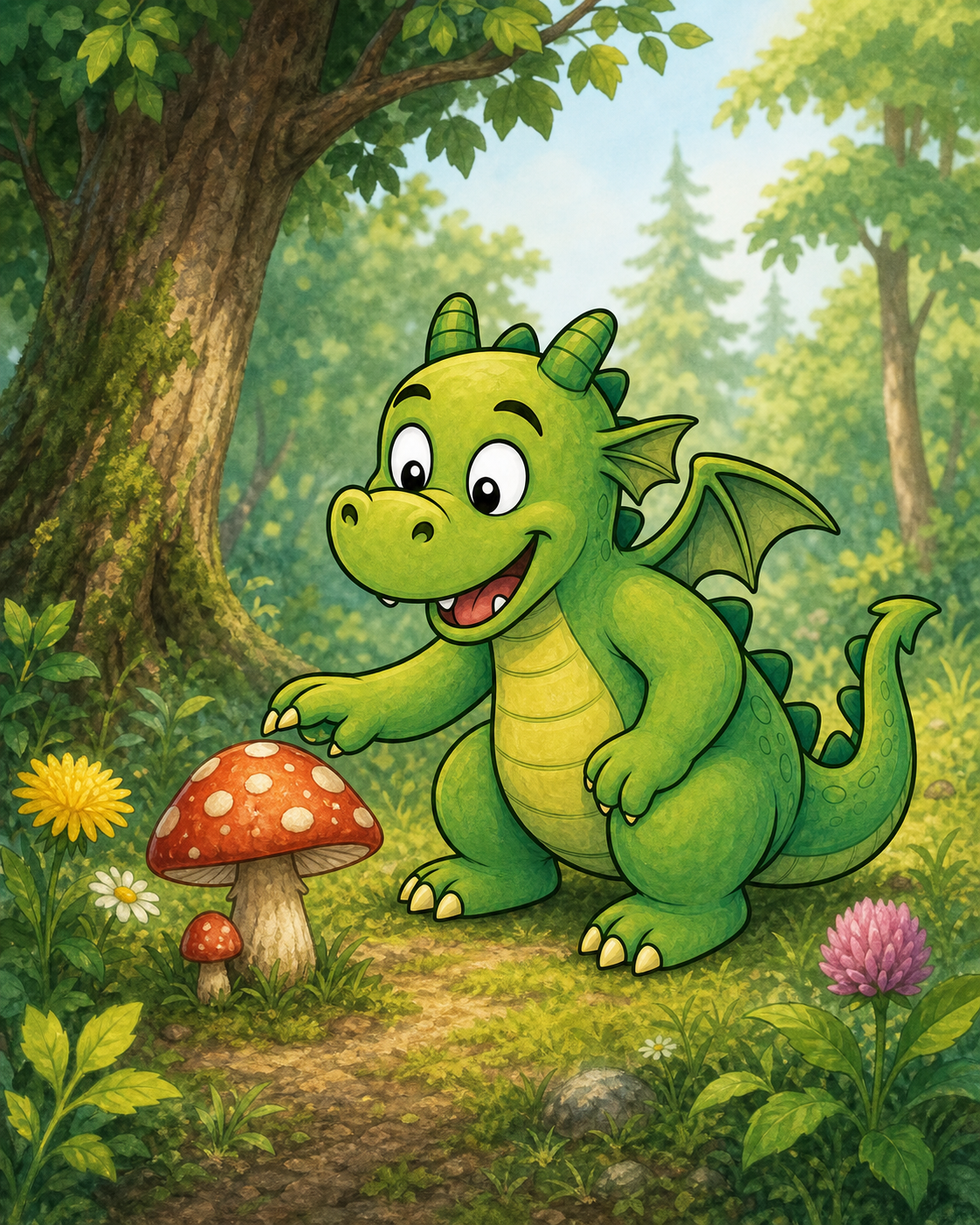
Discuss the path beforehand
Show your child on a map or with photos where you're going beforehand. 'We'll take this path, then we'll reach the stream, and that's where we'll rest.' Predictability reduces uncertainty – especially in an unfamiliar environment.
Discover the forest as a quiet place
The forest is naturally less stimulating than the city: no traffic noise, no neon lights, no crowds. Invite your child to feel the silence: 'Can you hear how quiet it is? Just birds and wind.' For sensory-sensitive children, the forest can be a sanctuary.
Engage senses one at a time
Not everything at once! Focus on one sense at a time: 'Close your eyes – what do you hear?' Then: 'Feel this bark – is it rough or smooth?' Individual sensory impressions are easier to process than many at once. Let your child choose what they want to touch.
Get to know plants – with respect
Show 3–5 plants you'll find again and again: moss, fern, clover, dandelion, forget-me-not. Few, but well. Explain: 'We look and smell, but only pick what we know.' Repetition creates familiarity and security.
Own pace – no hiking pressure
Some children want to play at a tree trunk for 2 hours. That's not wasted time – it's deep engagement. Don't plan long distances. A short path with many breaks is more valuable than a summit. 'We don't need to go anywhere. We're already here.'
Observe animals – from a safe distance
Ants, beetles, birds – the forest is full of life. Observe from a distance without disturbing. For children who find insect contact uncomfortable: 'You don't have to touch anything. Looking is perfectly fine.' Respecting boundaries applies to nature too.
Water as calming element
A stream, a pond, raindrops on leaves – water has a naturally calming effect. Let your child listen, throw stones or hold their hand in the water. Water sounds can help find calm when everything feels like too much.
Find a 'personal tree'
Find a special tree together – your tree. Visit it regularly, in every season. 'How does it look today? Does it have new leaves?' Recurring places create security and connection. The tree becomes a reliable friend.
Set clear time boundaries
'We'll stay until the sun goes behind the trees' or use a timer. Announce the end 10 minutes before. Transitions in the forest are especially hard because it's so beautiful. A farewell ritual helps: 'Bye, forest! We'll come back.'
Gratitude for nature
On the way home: 'What did the forest give you today?' Maybe a beautiful stone, a leaf, or simply peace. Practising gratitude strengthens the connection to nature and to one's inner self. Every forest visit is a gift – even if it only lasts 15 minutes.
Dosing Sensory Experiences
The forest offers many sensory impressions. Here's how to dose them gently:
Hearing
Start with eyes closed. What sounds are there? Birds, wind, water?
Touch
Let the child choose: moss, bark, stones. Never force contact.
Smell
Crush a leaf gently. What does it smell like? Fresh, earthy, sweet?
Sight
Look up through the treetops. The play of light calms the nervous system.
Important: If your child doesn't want to participate in a sensory exercise – that's perfectly fine. Observing is also experiencing.
Forest Rules
- 1Stay on the path – or agree on boundaries together.
- 2Don't eat berries or mushrooms without asking an adult.
- 3Leave animals in peace – observe, don't chase.
- 4Take all rubbish home – the forest stays clean.
- 5Don't break living branches – dead wood on the ground is fine.
- 6If you get lost: stay where you are and call loudly.
Spuki's Task
Collect 5 different things from the forest floor (only what's already lying there!): a leaf, a stone, a piece of bark, a feather, something soft. At home, glue them onto a piece of paper and write next to each one how it felt. This is your personal forest treasure map!
Tip: If you don't want to touch something – that's fine! You can also draw it or take a photo.
Spuki's Forest Treasure Hunt
Can you find all 12 forest treasures? Check off each one you discover! You don't have to find them all at once – you can come back another day.
Remember: Only collect what's already on the ground. Living plants stay where they are.
The Four Elements in the Forest
The forest contains all four elements. Help your child discover them:
Earth
Soil, stones, roots, moss – feel the ground beneath your feet
Water
Streams, dew, rain, puddles – listen to the water's song
Air
Wind in the trees, bird songs, your own breath – close your eyes and listen
Fire
Sunlight through leaves, warmth on skin, inner fire of curiosity
Tip for Parents
The forest doesn't judge. There's no 'right' way to experience nature. If your child wants to sit quietly and watch ants for 30 minutes – that's nature education. If they want to run and scream – that's also nature education. The forest holds space for everything. And so can you.
5 Plants to Recognise
These plants grow in Swiss forests and are easy to identify. Start with these – repetition creates confidence.
Moss
Soft, green, grows on stones and tree trunks. Feels like a tiny carpet.
Fern
Large, feathery leaves. Curls up when young (fiddlehead). Grows in shady spots.
Clover
Three round leaves. Sometimes four – that's lucky! White or red flowers.
Dandelion
Yellow flower, becomes a fluffy seed head. You can blow the seeds away!
Forget-me-not
Tiny blue flowers with a yellow centre. Grows near water. A symbol of remembrance.
These tips were developed in collaboration with the Humanistic School Switzerland and Inklusion Schweiz. Our approach: The forest is for everyone – at their own pace, in their own way.
Spuki on the Rigi
Spuki discovers the Swiss mountains – a story about nature, courage and friendship.